Alys Kay, Independent Research Culture Consultant and Coach (LinkedIn). Associate, National Centre for Academic and Cultural Exchange. Contributor, Research Culture Enablers Network
Recognition, documentation, and collective intelligence in research
Collaborative research is widely described as collective. Yet the systems used to record research knowledge are usually individual. Across research environments, a familiar moment recurs. Anyone who has worked on a complex funding bid, interdisciplinary project, or collaborative programme will likely recognise it:
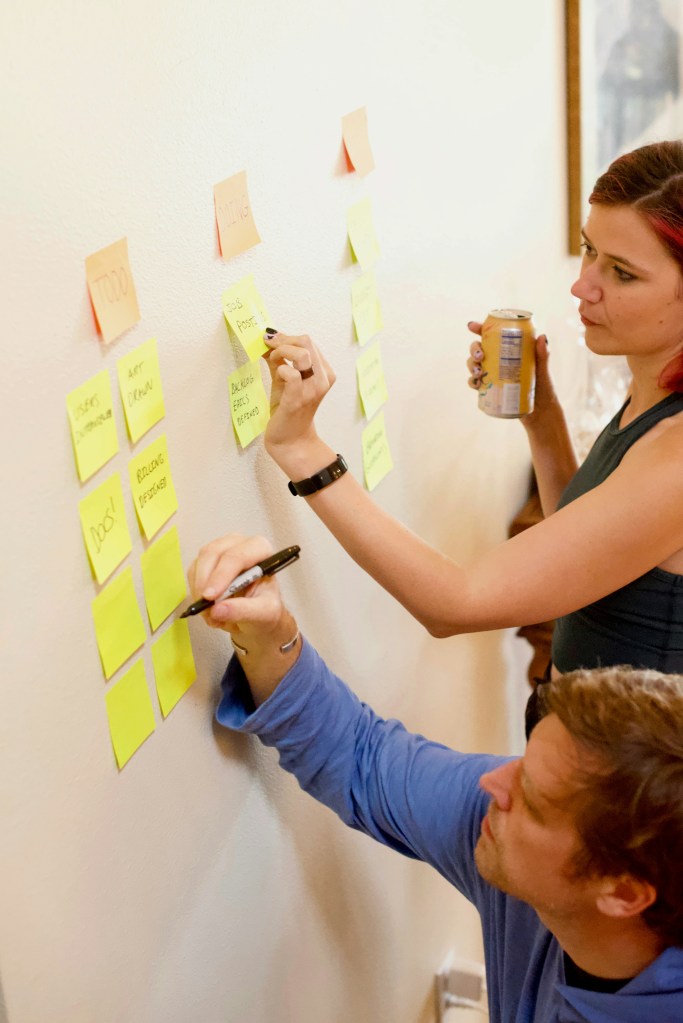
Picture the scene. A meeting has just finished. Over the past hour, ideas have been challenged, translated, and reshaped through discussion. A project manager has surfaced a downstream operational risk. A technician has identified a feasibility issue that changes the timeline entirely. Someone working with community partners has reframed the ethical implications of a proposed approach. A facilitator has helped the group navigate disagreement without shutting discussion down.
A week later, the resulting insight appears in a funding application, strategy document, meeting paper, or publication narrative as a stable idea attached to a small number of named positions. The collective knowledge is still there. But the process through which it formed has largely disappeared from view. This is rarely about deliberate ‘credit claiming’. More often, it reflects how research systems are designed. Knowledge must be stabilised into forms that are attributable, auditable, and institutionally legible.
Recognition is often framed as a fairness issue: who is visible, who is credited, whose work is valued. These questions matter. But recognition systems also perform a deeper function. They shape what research systems remember about where knowledge comes from. Over time, what systems repeatedly record becomes what they learn to recognise as knowledge.
Across my qualitative work with collaborative research teams across multiple institutions, a consistent pattern emerges.
From live collaboration to recorded knowledge
In live working environments, insight often emerges through:
- disciplinary translation
- structured disagreement
- operational foresight
- integration of competing institutional, funder, and community priorities
- relational work that enables uncertainty to be surfaced rather than suppressed
Research on collective intelligence demonstrates that group performance is strongly shaped by social sensitivity, balanced participation, and interaction dynamics rather than individual brilliance alone (Woolley et al., 2010). In practice, this often looks less like individual brilliance and more like distributed intellectual labour, for example:
- Someone identifies downstream risks because they hold operational or community knowledge.
- Someone integrates competing requirements across regulatory, disciplinary, and strategic contexts.
- Someone translates technical complexity into shared understanding.
- Someone creates the relational conditions that allow disagreement to improve decisions rather than derail them.
In live spaces, this distributed formation is often visible. It may be informally recognised. But research systems are not primarily designed to record process. They are designed to record accountability, decision authority, and output responsibility. Most people working in collaborative environments can probably name moments where they watched a collective process become retrospectively simplified into a cleaner authorship story.
When knowledge moves into institutional artefacts, funding applications, publications, strategies, REF narratives, promotion cases, meeting papers, evaluation reports, the story of its formation is often simplified.
How collaborative thinking becomes stabilised
Recognition systems are often described as reward systems. They are also stability mechanisms. Institutions require knowledge to be attached to identifiable actors who can be formally accountable. Stabilisation is structurally necessary.
However, when stabilisation becomes conflated with origin, research systems risk internalising an incomplete account of how knowledge forms under complex conditions. Work on research culture and contributor recognition increasingly highlights the need to recognise distributed and relational contributions to research outcomes.
Recognition systems do not only allocate credit after knowledge is produced. They shape the recorded origin story of knowledge. Over time, repeated simplifications influence what systems learn to treat as legitimate intellectual contribution.
What systems repeatedly record becomes what systems learn to recognise. What systems learn to recognise becomes what future researchers learn to perform.
Implications for researcher development and research culture
This reshaping of what is valued, has implications beyond fairness. It affects capability.
If early and mid-career researchers are primarily exposed to simplified models of knowledge origin, where insight appears to emerge from positional authority rather than distributed collaboration, this shapes how collaboration, leadership, and intellectual contribution are understood and reproduced.
Over time, cumulative effects emerge:
- Integrative thinking becomes career-fragile.
- Interdisciplinary collaboration depends on invisible coordination.
- Relational and emotional labour becomes structurally relied upon but weakly supported.
- Intellectual integration is mistaken for administrative support rather than knowledge production.
This is not simply a recognition problem. It is also a system learning problem. As research becomes more interdisciplinary, externally engaged, and partnership-based, high-quality knowledge formation increasingly depends on distributed expertise. Systems that cannot accurately record how knowledge forms will struggle to design environments that allow good knowledge to emerge consistently.
Toward more accurate recording of collaborative knowledge
There are already signs of shift across the sector such as contributorship models that differentiate types of intellectual contribution; documentation practices that capture how interpretations and decisions were formed; shared authorship and co-leadership models in interdisciplinary programmes; and leadership narratives that distinguish accountability from intellectual integration.
These approaches do not dilute responsibility. They improve descriptive accuracy. They allow research systems to distinguish between who is accountable, who is visible, and who is thinking.
Recognition systems are not only part of career infrastructure. They are part of knowledge infrastructure. They shape what research cultures remember about how knowledge is made. If recognition systems consistently simplify distributed formation into singular origin stories, research cultures risk mis-recognising the conditions that enable reliable knowledge in complex environments. This is not solely an equity issue. It is also a research quality issue.
None of this means accountability should disappear, or that every conversation can be fully documented. Research systems need clarity, responsibility, and decision structures. But there is a difference between simplifying knowledge for institutional purposes and forgetting how it was actually formed. As research becomes more distributed and more interconnected, the challenge is no longer simply how to distribute credit more fairly. The challenge is whether recognition systems are capable of accurately recording how knowledge is actually formed.
Recognition does not only shape careers. It shapes what research cultures learn to see as thinking. It shapes what future researchers understand as contribution. Over time, it shapes what research systems become capable of knowing. If research systems want to support reliable, collaborative, high-quality knowledge production, recognition may need to evolve, from a record of contribution to a more accurate record of how knowledge forms in practice.


Leave a Reply