Dr Peter O’Rourke, Researcher Development Manager (Research Staff), and Becky Rowe (LinkedIn), Future Leaders and Innovators Graduate Scheme, University of Exeter, UK.
This blog post gives an overview of a recent project at the University of Exeter to transform an underused and rudderless Early Career Researcher (ECR) SharePoint site into a destination site where ECRs can find useful resources and feel their place in the university ecosystem is visible and important. Through a successful application to the University of Exeter’s flagship Graduate Scheme ‘Future Leaders and Innovators’, Project Supervisor Peter O’Rourke secured Graduate Becky Rowe on placement for four months, enabling a shiny new SharePoint that has a logical structure, engaging content, and a lasting legacy for ECRs and the wider research community.
Challenge: Stale, Neglected ECR SharePoint
The ECR Resource Hub SharePoint site was originally set up in 2021 and was clearly a well-intentioned initiative to provide a location for information and resources for ECRs. However, due to demands of work and changes in staffing, the ongoing maintenance and development of the site had been neglected. On reviewing the site in 2024, it appeared not to be serving much of a purpose, and had barely any footfall. It was effectively a repository for agendas and action notes from representation meetings, as well as listing the ECR networks. An existing blog had seen only three posts from the site’s inception to July 2024. The site’s name ‘Resource Hub’ was something of a misnomer given the lack of resources.
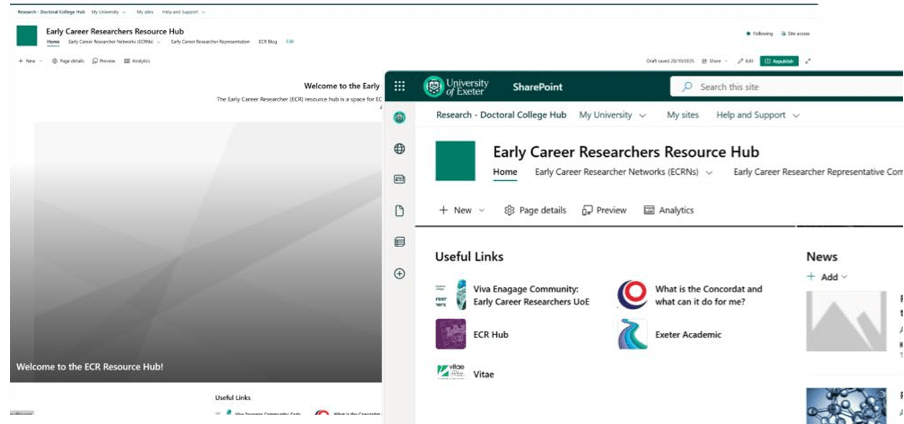
Initial steps were made to update the site (see Figure 1), for instance by removing and reordering documents, and by relaunching the ECR blog with regular posts, recognising the community building value of blogging (Stephens, 2016). We had a bank of material that could be adapted into brief and engaging blog posts written by ECRs who had led internally funded awards focusing on researcher development and/or ECR network building. We also established a new Microsoft Viva Engage community for ECRs which was embedded into the site, helping to raise visibility of ECRs across the institution (Waghmare, 2024). However, it was difficult within existing resource to dedicate focused time on a full revamp of the site and to turn attention to the development of resources. In truth, the initial steps were sticking plasters.
Transformation Project
Successfully securing Becky on placement full time, for four months, gave us dedicated focused time and energy to complete the site’s transformation. As Becky was part of the Graduate Scheme, she came to the placement with insights from her training in project management, stakeholder management, risk and legacy management and she immediately set to planning the different phases of work.
The ECR Resource Hub needed drastic surgery, not just temporary sticking plasters. The objectives of the placement were to:
- Create new content, including resource pages and blog posts
- Review and update appearance and format, ensuring all links were up-to-date
- Ensure a better user experience with more engaging and professional images, and a more intuitive structure
- Establish a Career Conversations series with researchers at various stages of their careers in different faculties, with a steer towards advice for ECRs
These placement objectives were designed to ensure we could meet our aim of creating a new ECR Resource Hub that has useful resources, fosters community and raises visibility of ECR experiences and issues.
Site Structure
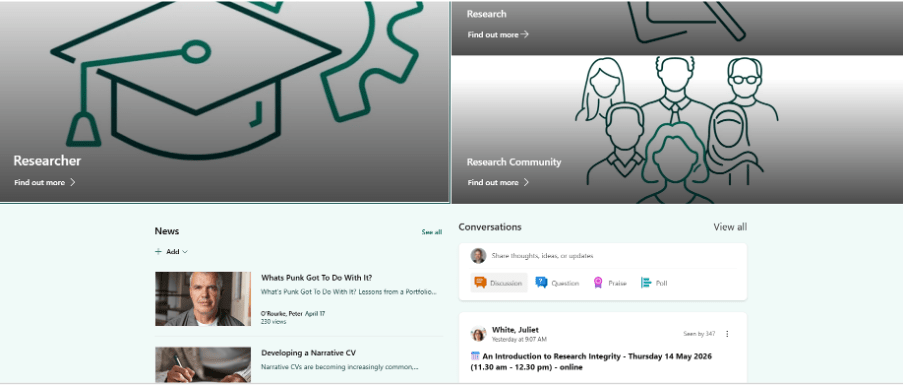
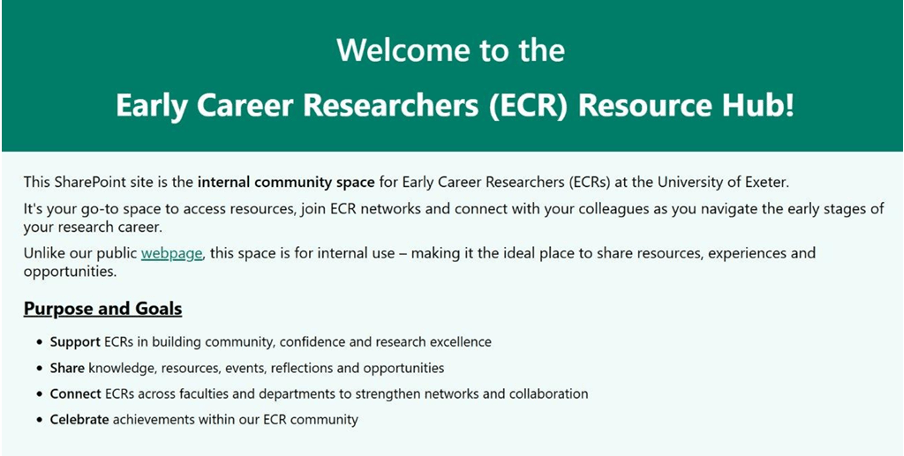
A lightbulb moment was when we decided to transform the structure using the newly revised Vitae Researcher Development Framework (RDF) (Vitae, 2024), giving us three core thematic headings: Researcher; Research; Research Communities. Structuring the site in this way gave it a clear navigation, and also helped us to identify potential resources to develop that spoke to the descriptors of the RDF. Furthermore, it was a way of raising the RDF’s profile among ECRs and the wider researcher community, underlining its value for researchers who were considering ways to develop their skills and competencies, as shown in Figures 2 and 3 below.
Co-creation with ECRs and Researcher Community
A key approach we took in devising new content was to work with the researcher community, embracing democratic and relational values of co-creation (Lubicz-Nawrocka, 2018). This is best demonstrated by the Career Conversations series, which is made up of six episodes, each one with a different academic sharing insights from their career journey with a view to helping researchers in their early career stage. We reached out to several academic colleagues across faculties and campuses at different career stages to ensure the series was representative of the rich diversity of research careers at Exeter. The episodes include filmed conversations which were carefully edited, with distinct themes appearing in each.
Legacy
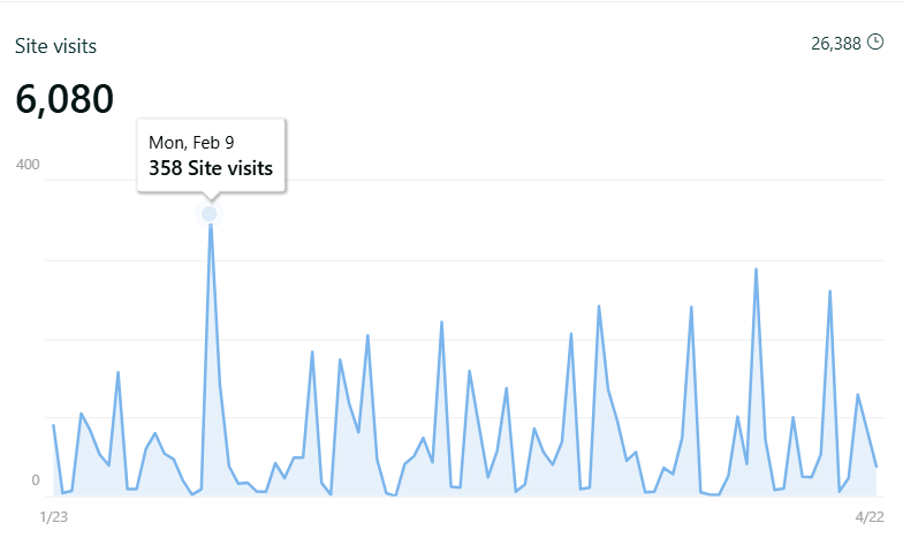
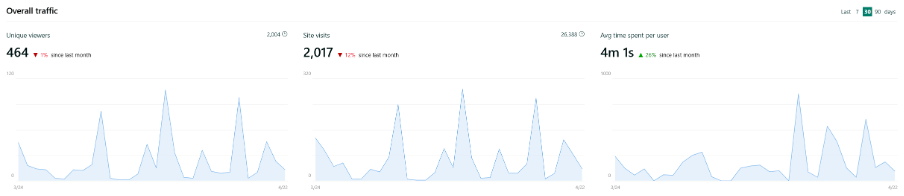
The newly revamped ECR Resource Hub has seen increased engagement, with pages and posts receiving positive feedback (Figures 4 and 5). The site is continuing to foreground ECR identities and experiences and raising the profile of ECRs across the institution, including at senior management level, hopefully emphasising the fundamental role ECRs play in the university ecosystem. This project hopefully provides some useful takeaways for others who may have some underused or neglected intranets lurking in the back of the drawer, and even without the benefit of dedicated project staffing, small steps can be made gradually to transform sites, especially thinking about logical navigation, co-creation of content and engaging visuals. Visitors to the site have informally commented “the new ECR SharePoint looks great! I really like how it is structured and presented”; and “This looks amazing. You put so much effort, and I really like the pictures and graphics.”


Leave a Reply