Dr Tristan Harkcom (ORCiD), Researcher Development Training Officer, University of Surrey, UK
When you go looking for the ‘traditional’ PhD, what you find may surprise you. Why does this matter? As MacFarlane and Yeung (2023) point out, ascribing the term ‘tradition’ to an academic practice has the potential to confer a mythic quality on that practice. This may lead to two potential distortions: For innovators, the word tradition allows them to claim the identity of ‘antiestablishment hero’ overcoming the entrenched habits of their colleagues. In the hands of a traditionalist, however, an appeal to tradition can be used as a brake on overdue reforms.
This problem is particularly acute in the case of the PhD because accounts of doctoral practice and education often overlook what a recent innovation this degree is. The first Doctor of Philosophy degree was awarded in Britain as late as 1919 (Simpson, 1983 and 2009 traces this story; for the historical origins of the PhD, see Clark, 2006). In this environment, traditions can crystallize rapidly and be hard to shift; alternatively, the reintroduction of past practices can be mistaken for novelty.
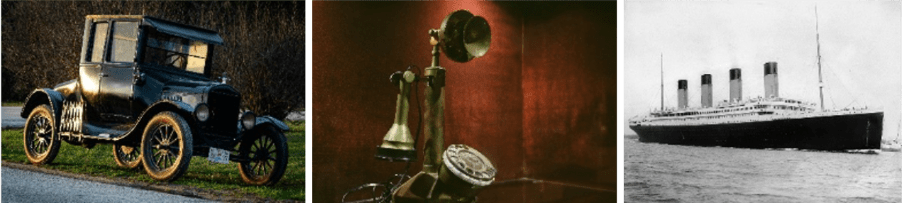
This blog post invites you to enjoy a surprising encounter with the history of the PhD. Using a report on conference on Doctoral Education that took place in 1969 at my institution, the University of Surrey, I hope to show that the practices and attitudes that we encounter in the past can provide a challenge to our notions of tradition.
But first, I want to express my gratitude to the team at the University of Surrey Archive for all the support they have offered while I have investigated this topic.
What should be the nature of the Surrey PhD?
The conference, titled ‘What should be the nature of the Surrey PhD’, took place on 2 April 1969, a little less than three years after the Battersea College of Technology had been granted its charter as the University of Surrey (Pick, 2002). It was convened in response to the Swann Report on ‘The Flow into Employment of Scientists, Engineers and Technologists’ that had encouraged universities ‘to examine the nature and purpose of the Ph.D. degree from first principles’. To address Swann’s injunction, the conference brought together academics from a range of disciplines with industrial supervisors representing the needs of employers.
The central question of the conference was how doctoral students could best be trained for careers in academia and industry. There was nothing new in the idea that training was core to the PhD. In 1918, Ernest Rutherford (quoted in Nature, 1918) hailed the then new invention as a ‘full period of post-graduate training.’ Precisely the view was echoed at Surrey by W.H. Lee, who said of the PhD that ‘its aim is—or should be—to give a training in Research’. Equally, his statement is a reminder that this purpose may not have been consistently observed.
The precise nature of this training was an important issue at the conference in Surrey. Representatives from industry expressed the view that PhD graduates, after focusing on a narrow research topic, had often forgotten some of the broader knowledge of their discipline that would be necessary for their careers.
One solution that was proposed was to increase the number of taught hours on PhD programmes. One speaker at the conference, V.S. Griffiths, called for this to rise to a hundred hours. This is striking because in recent years, one of the innovations against which the traditional PhD has been contrasted are ‘new route’ or ‘structured’ PhD programmes (e.g. Roberts, 2002; Hodell et al., 2002; Johnton and Murray, 2004; Park, 2005; Taylor and Wisker, 2023). These are Doctoral programmes that incorporate substantial taught activities typically during the first of four years of study. Set against these programmes, the traditional PhD is usually held to consist of lone working on substantial research project for 3 to 4 years, assessed solely by viva. Surrey’s regulations were updated after the conference in 1974, requiring students to attend ‘forty-five lectures or seminars and twenty colloquia or equivalent educational activities in the First and Second Years’. It was only in 1986 that the requirement to attend lectures was made optional, and the so-called ‘traditional’ self-directed model of PhD training became the norm at Surrey.
This conference is a reminder that debates around doctoral training have been ongoing for some time. This needn’t be a brake—we shouldn’t write off formal training for postgraduate students as ‘tried and abandoned’. It is, however, a reminder that past can be an important source of lessons informing how these long-term questions are addressed in the future.
What else is hidden in the archive?
I want to conclude this piece by encouraging you to engage with archived institutional documents at your own institution. As I have found at Surrey, looking at documents like minutes, reports and regulations often brings you into contact with a PhD that looks at once more familiar and more alien than you expect.
This needs to be a team effort. Considering, for example, Stan Taylor’s monumental works reviewing the current practices at ca. 150 institutions with regard to doctoral examination (Taylor, 2022) and supervisor support (Taylor, 2026), you can understand that adding the historical dimension to consideration of these aspects of the doctorate at every institution is beyond the scope of a single study.
This work may uncover all kinds of surprises regarding who studied for PhDs, how they were supervised, entry requirements, how they were examined and who they were examined by. I believe that having these encounters with the unexpected can provide us with essential material for confronting our own preconceptions of doctorate-ness along with those of the researchers we work with.
—
Statement on the use of Generative AI
Generative AI was not used in the drafting, proofing or editing of this blog post. As part of my wider exploration of this topic, I have attempted to identify relevant texts and sources using Microsoft CoPilot, but I have found its suggestions largely unusable.
* Image Credits: (from left to right): Andrew Lancaster on Unsplash ; Vanburn Gonsalves on Unsplash ; Francis Godolphin Osbourne Stuart on Wikimedia Commons


Leave a Reply